Where it began
I played semi-professional football until my early twenties. When that chapter ended, I stayed close to the game, but from a different place.
A few years later I returned to the training ground, first watching youth sessions and gradually stepping into coaching myself. At first I was not searching for anything in particular. I simply observed.
What I saw felt familiar.
Long lines of children waiting. Dribbling through cones again and again. Training sessions that seemed far removed from the reality of the game. And the way the coach spoke to them, or rather, at them.
The strange part was that none of this was new to me. This was exactly how I had trained when I was a player. But seeing it from the outside left me with something I could not ignore. A quiet discomfort and a growing curiosity that refused to disappear.
What happened in the first years
The first challenge I had was simple: there was almost no one in Romania to talk to about any of this.
I felt powerless. I knew there was something worth understanding, but I had no reference points that resonated, no language for what I was sensing, no clear idea what to search for.
That feeling is not unusual. Many coaches working in youth football sense that something is not quite right but cannot locate it, cannot name it, cannot find the people or ideas that might help them move forward.
So I started looking elsewhere.
The first ideas that began to reshape how I understood learning came from ecological dynamics, which studies how movement and decision making emerge from the relationship between the player, the task and the environment.
Then nonlinear pedagogy, which questions the assumption that learning follows a straight line or that the coach’s role is simply to transfer knowledge into the player.
Then the constraints-led approach, which shifts the question from what the coach should teach to what kind of environment the coach should design.
All of these perspectives pointed in a similar direction. The environment is not neutral. It shapes how players perceive, decide and act.
Later I encountered the work of Wolfgang Schöllhorn on differential learning, which pushed this idea further and suggested that variation, not repetition, is often what drives the development of skill.
Gradually I began connecting with coaches and researchers from other countries who were exploring these ideas in real training environments, working with real children.
Then came what I can only describe as a moment of madness: the decision to organise a conference.
It started from a simple impulse. I wanted to share with other coaches the ideas I had discovered, ideas that felt genuinely valuable and that I could not keep to myself.
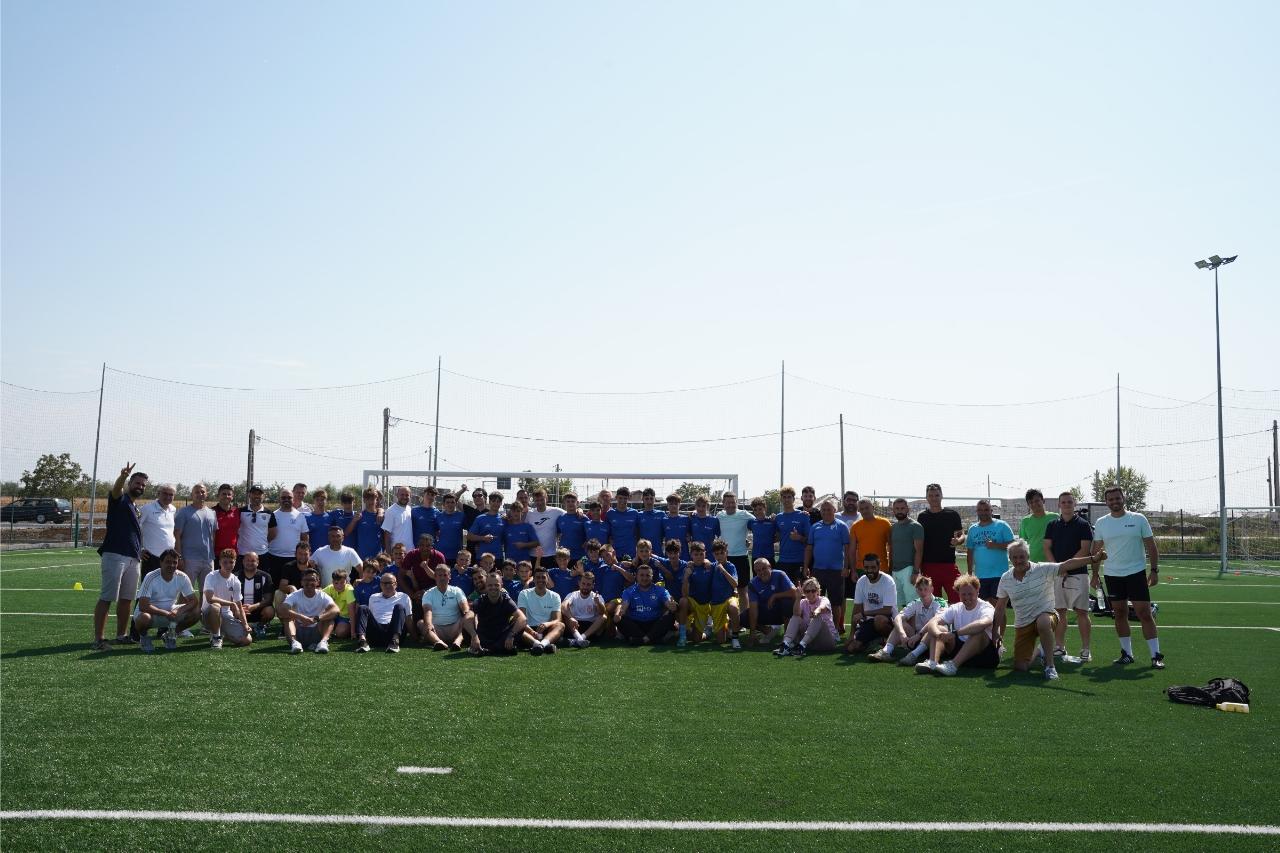
The first edition took place in August 2024 in Oradea, across two days at the Oradea Fortress and Transilvania Sport Academy.
Researchers, academy coaches and practitioners who had spent years working with these ideas came together. They came to share ideas and explore the questions we were all trying to understand.
What emerged during those two days was something I had not planned: a group of people asking similar questions.
Why Radical Football, why now
The word radical is not chosen for effect. Radical means root.
It means returning to the fundamental questions before trying to improve anything: who is youth football really for, and what genuinely helps children learn, explore and develop through the game?
I did not arrive at these questions through theory. They emerged gradually through years of searching for something I could feel but could not yet clearly name, through work on the training ground, and through the growing realisation that the systems surrounding youth football are often built around everything except the child.
As football becomes more professional at younger ages, expectations and pressures also appear earlier. Patience for real development becomes rare. In that environment the everyday experience of the child can easily become secondary.
Radical Football exists to keep the focus on learning, development and the environments that shape both.
Where it is going
The search that began on the sideline of that training session has not stopped.
Around it, the Radical Football ecosystem has gradually taken shape: the annual conference, the Radical Library as an open educational resource, a digital journal grounded in practice, and circles of contributors who continue the conversation throughout the year.
When I think about what I want to leave behind, it is not a methodology or a movement.
It is something quieter.
Environments that are genuinely suited to how children grow. Adults who are more attentive to what children actually need. And children who feel that their development is respected, even if they never think about why.
That is what this is for.
Flavius Andrișca Founder, Radical Football