🔬Research
NewTraining or Synergizing? Complex Systems Principles Change the Understanding of Sport Processes
Flavius Andrisca
3 May 2026
20 views
enU12-U16U17+Complex Systems & Ecological DynamicsFoundation

Rafel Pol, Natàlia Balagué, Angel Ric, Carlota Torrents, John Kiely, Robert Hristovski
Institut Nacional d’Educació Física de Catalunya (INEFC), University of Barcelona; University of Lleida; FC Barcelona; University of Central Lancashire; Ss. Cyril and Methodius University, North Macedonia
Sports Medicine - Open·2020
https://doi.org/10.1186/s40798-020-00256-9Creative Commons CC BY 4.0 (Open Access)
Description
A conceptual paper exploring how complex systems science, ecological dynamics and biological evolution reshape the understanding of sport training. The article argues for moving from isolated training components toward the development of synergies, adaptability and diversity potential within athletes and teams.
Training or Synergizing? Complex Systems Principles Change the Understanding of Sport Processes
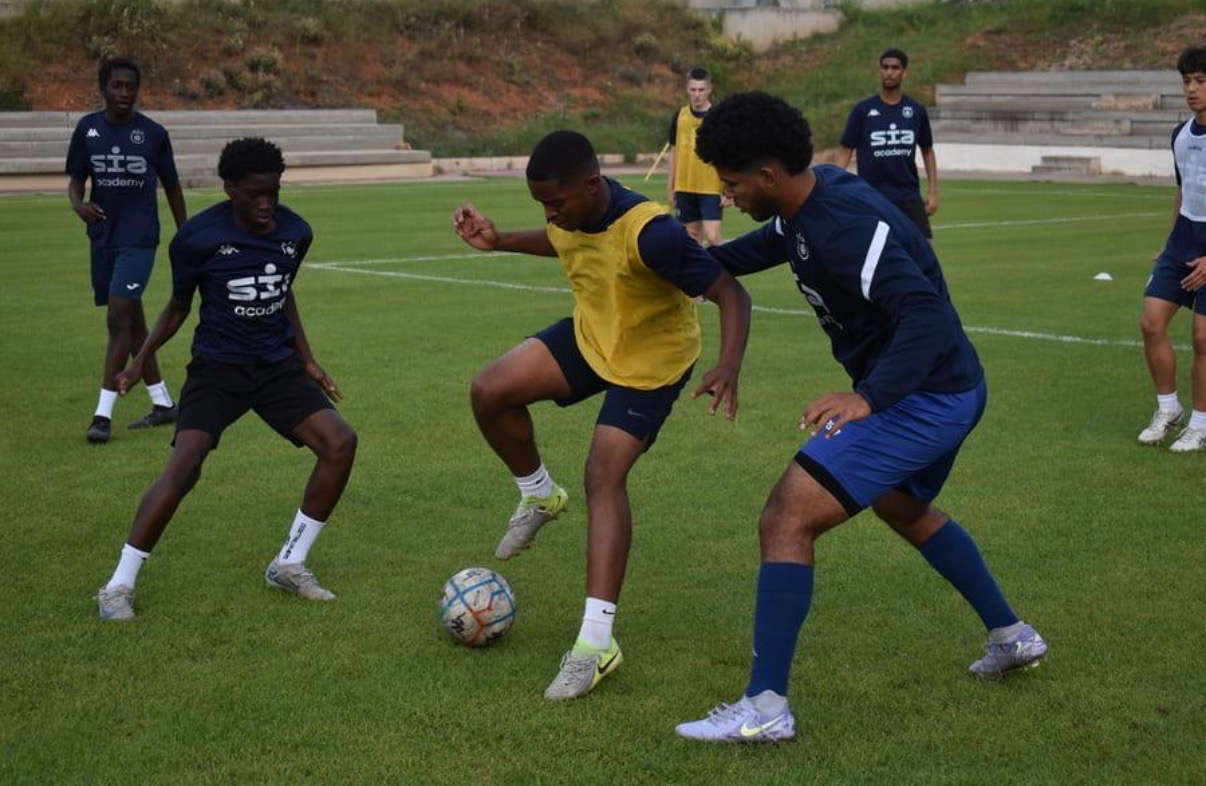
Applied Summary
This article proposes a shift in how sport training is understood through the lens of complex systems science. Rather than viewing athletes as isolated components to be optimized separately, it frames players and teams as adaptive systems shaped by interactions between environment, constraints, relationships and time. The authors argue that training should focus on creating synergies and increasing diversity potential rather than maximizing isolated physical or technical attributes. Learning and performance emerge through representative environments, contextual variability and co-adaptation between performer and surroundings. The paper connects ecological dynamics, nonlinear pedagogy and constraints-led thinking into a broader conceptual framework for sport processes.
Relevance for Coaches
This study helps coaches rethink how learning is designed rather than how drills are prescribed. It challenges fragmented training models and supports representative, game-based environments where perception, decision making and movement evolve together. It is especially relevant for youth football because it emphasizes adaptability, exploration, team interaction and contextual learning instead of repetition and isolated correction.
Concrete Application
* Design practices around game problems instead of isolated techniques. * Manipulate constraints such as space, player numbers, scoring rules or tempo. * Use representative small-sided games that preserve informational links from competition. * Observe team coordination and interaction patterns rather than only individual execution. * Adjust training continuously according to player responses and emerging behavior.
Assumptions about the Child
The article assumes the child is an adaptive, self-organizing system whose development emerges through interaction with the environment. Learning is nonlinear and shaped by context, motivation, social dynamics and perception-action coupling. Development cannot be reduced to fixed stages or isolated capacities.
Limits and Risks
The article is conceptual rather than experimental and does not provide direct protocols or measurable intervention models. Some ideas may be interpreted too abstractly without strong coaching understanding. There is also a risk of misusing “complexity” as a justification for unstructured practice. Effective application still requires intentional design, observation and contextual sensitivity.
Pedagogical Intent
This resource targets the development of adaptive decision making, contextual awareness and coordinated team behavior within dynamic football environments. It supports player autonomy by encouraging exploration, problem solving and perception of affordances instead of dependence on fixed instructions. The learning process emerges through interaction with constraints rather than repetition of predetermined solutions. It activates relational dynamics between player, teammate, opponent and environment, emphasizing co-adaptation and shared regulation. Coaches are positioned as designers of learning conditions rather than prescribers of behavior.
Working Hypothesis
If players are exposed to representative, variable and constraint-based training environments that preserve the informational demands of the game, then then they are more likely to develop adaptive decision making, coordinated team behavior and diverse movement solutions under pressure, because because learning emerges through continuous interaction between performer, environment and task constraints, allowing new synergies and functional behaviors to self-organize over time.
Failure Conditions
Unsuitable Context
rigid curriculum environmentsdrill-only coaching culturesshort-term performance pressurehighly prescriptive academiescoach-centered instructionisolated technical sessions without context
Probable Misreading
“anything goes” interpretationabsence of structureremoving coaching guidance completelyconfusing variability with randomnessassuming complexity means no planningrejecting technical work entirely
Pedagogical Risk
chaotic session designlack of intentional constraintsoverload through poorly designed variabilityreduced clarity for young playersabandoning progression principlesmisapplication without understanding ecological dynamics principles
A structured terrain report from anyone who has applied this resource in real practice.
Loading field notes...
Quick Info
Type
🔬Research
Status
NewVersion
v1.1
Language
en
Age Groups
U12-U16, U17+
Duration
45 min
Complexity
advanced
Secondary Themes
Constraints-Led Approach* Training Methodology* Skill Acquisition* Team Dynamics