🔬Research
NewTeaching to Coach Football: Pre–Post Changes in Declarative Tactical Knowledge Following a 14-Week University Programme
Flavius Andrisca
3 May 2026
14 views
enU12-U16U17+Coach EducationApplication
Rubén Sánchez-López, Enrique Hernando
Universidad Autónoma de Madrid, Spain, RENCOMOCAFYD Research Gro, University of Castilla-La Mancha, Spain
2026
https://doi.org/10.1016/j.footst.2026.100025Creative Commons CC BY 4.0 Open Access
Description
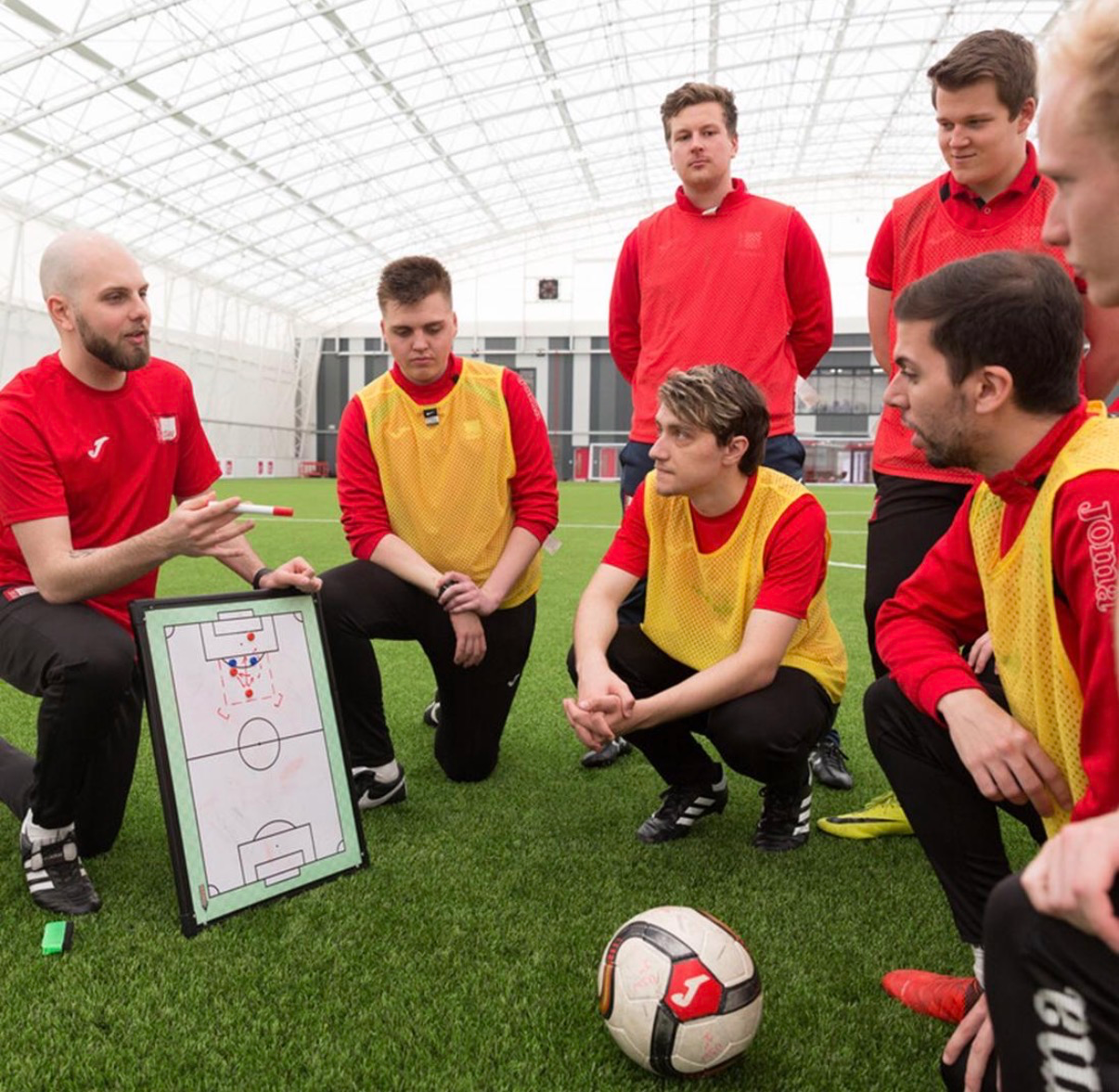
A university-based study examining how a 14-week football teaching programme influenced declarative tactical knowledge in Sport Sciences students. The research explores how coach education can integrate tactical understanding, representative learning and constraints-led pedagogy to improve coaching-related decision making.
Applied Summary
This study examined how a 14-week university football teaching programme influenced declarative tactical knowledge in Sport Sciences students. Using a pre–post design with 54 participants, researchers measured tactical understanding through TesTactico for F7, a scenario-based assessment tool. Results showed improvements in global tactical understanding, offensive and defensive principles, and selected tactical roles. The programme combined theoretical sessions, skill-based learning, representative practice and constraints-led activities. Findings suggest that coach education can improve tactical reasoning when learning is built around football’s internal logic and contextual decision making.
Relevance for Coaches
This resource helps coaches understand how tactical knowledge can be intentionally developed during coach education. It provides evidence that combining practical football sessions with conceptual learning improves understanding of game principles. It is especially relevant for coaches working with youth players because it connects pedagogy, task design and tactical reasoning.
Concrete Application
* Integrate tactical questioning inside football sessions. * Combine skill practice with representative games. * Use constraints to shape tactical learning. * Design tasks around game principles rather than isolated technique. * Assess players or coaches through scenario-based tactical decisions.
Assumptions about the Child
The article assumes that learning develops through interaction with representative football environments. Tactical understanding grows through exposure to game problems, contextual feedback and repeated decision making. Learning is not separated from environment or task constraints.
Limits and Risks
The study used a single-group design without a control group, limiting causal interpretation. The sample came from one university context and mainly included students with football experience. Improvements were generally small and linked to a specific educational setting. The findings may not transfer directly to younger players or different coaching cultures.
Pedagogical Intent
This resource targets the development of tactical reasoning, coaching awareness and understanding of football’s internal logic. It supports autonomy by encouraging coaches to interpret game situations rather than rely on prescriptive instruction. It promotes learning through contextual decision making and representative practice. It activates relationships between coach, task, environment and player perception. It positions coaching as an educational process grounded in game understanding.
Working Hypothesis
If coach education programmes combine representative football practice, tactical reflection and constraints-led learning over time, then students are more likely to improve their declarative tactical knowledge and ability to interpret game situations, because repeated exposure to contextual football problems strengthens tactical understanding and connects theory with applied coaching decisions.
Failure Conditions
Unsuitable Context
drill-only environmentscoach education without game contextpurely theoretical teachingisolated technical instructionrigid pedagogical models
Probable Misreading
assuming tactical knowledge equals coaching competencereducing learning to test performanceignoring practical applicationtreating DTK as isolated cognition
Pedagogical Risk
over-intellectualized coachingexcessive classroom learning without field transferweak connection to player interactiontactical language without practical meaningassessment replacing learning
A structured terrain report from anyone who has applied this resource in real practice.
Loading field notes...
Quick Info
Type
🔬Research
Status
NewVersion
v1.0
Language
en
Age Groups
U12-U16, U17+
Duration
40 min
Complexity
advanced
Secondary Themes
Tactical KnowledgeConstraints-Led ApproachFootball PedagogyDecision Making